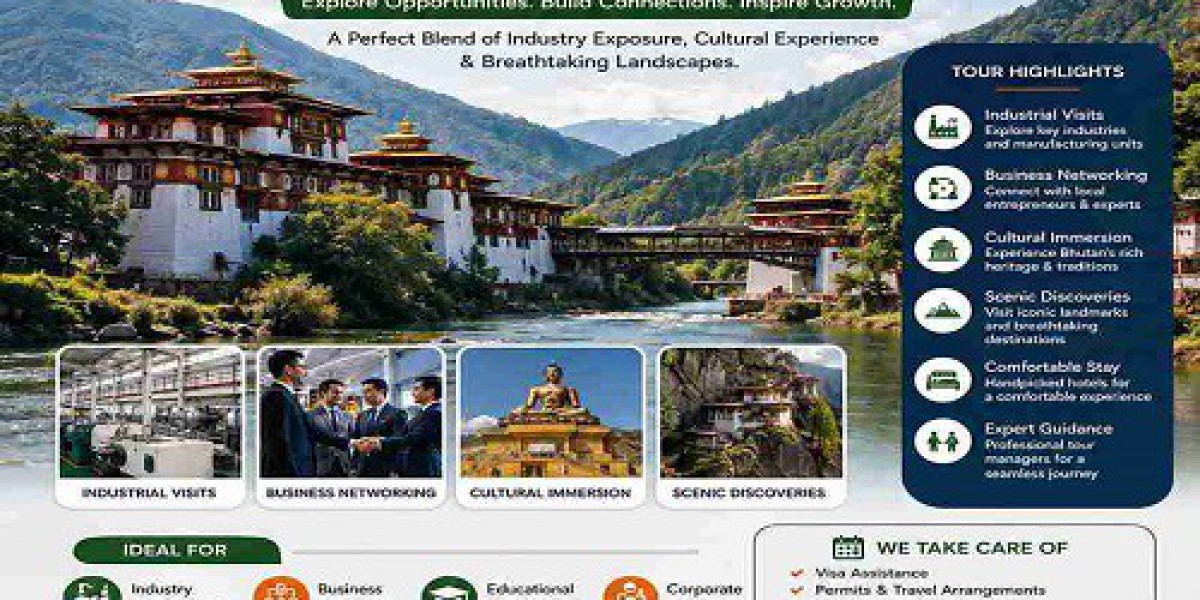

International educational travel can turn classroom concepts into practical understanding, particularly when students get the opportunity to observe how industries, institutions, communities, and natural environments work together. For Indian colleges and universities, Bhutan offers a distinctive setting for such learning. The country combines developing industries, sustainable infrastructure, cultural heritage, environmental initiatives, and a strong emphasis on education and community well-being.
For institutions planning an international academic experience, Bhutan Industrial Tour Packages can provide an opportunity to combine professional exposure with cultural discovery. A thoughtfully planned Bhutan tour can introduce students to real-world operations while also encouraging them to understand sustainability, responsible tourism, local enterprise, and regional development.
The short travel distance from India, familiar regional connections, peaceful environment, and diverse learning opportunities make Bhutan particularly suitable for college groups. However, the educational value of such a trip depends largely on preparation. Choosing appropriate visits, defining learning objectives, managing group logistics, and allowing enough time for reflection can transform an ordinary tour into a meaningful academic experience.
Why Bhutan Is an Interesting Destination for Student Learning
Bhutan is considerably different from the large industrial centres that Indian students may be accustomed to visiting. Its smaller scale can actually make it useful for academic observation because students can examine the relationship between economic activity, environmental responsibility, public infrastructure, and local communities.
The country is widely associated with hydropower, sustainable development, tourism, agriculture, handicrafts, and small and medium-sized enterprises. These sectors offer different perspectives for students from engineering, management, commerce, environmental science, hospitality, and related disciplines.
For engineering students, infrastructure and energy projects can provide valuable context for understanding how geography influences development. Management students can examine tourism operations, service management, entrepreneurship, supply chains, and small-business practices. Students interested in environmental studies can explore how economic development is balanced with conservation.
The most important point is to treat each visit as an academic activity rather than simply a sightseeing stop. Students should know what they are expected to observe, what questions they should ask, and how the experience connects with their coursework.
Industrial Exposure That Goes Beyond Factory Visits
An industrial tour does not necessarily have to mean spending an entire day inside a manufacturing plant. Modern educational tourism can include a broader range of professional and institutional experiences.
In Bhutan, depending on permissions, schedules, and the group's academic objectives, an itinerary may explore areas such as energy, infrastructure, hospitality, agriculture-based enterprises, handicrafts, tourism services, and emerging business activities.
For example, an engineering group studying infrastructure could examine how terrain, transportation networks, construction methods, and environmental considerations influence project planning. A management group might study customer service systems within hospitality businesses or investigate how tourism enterprises respond to seasonal demand.
These experiences can encourage students to compare Bhutanese practices with those they have observed in India. Such comparison is often where the strongest learning takes place. Instead of simply recording what they see, students can ask why a particular process is used, what constraints influence it, and whether a similar approach would work in a different economic or geographical environment.
Educational Value for Different Academic Groups
A well-designed international study tour can serve multiple academic disciplines at the same time.
Engineering students may benefit from exposure to infrastructure planning, renewable energy, construction challenges, environmental engineering, and geographical constraints. The mountainous landscape provides an interesting backdrop for discussing transportation, civil engineering, water resources, and sustainable development.
Management and business students can look at tourism economics, entrepreneurship, service operations, marketing, human resources, and customer experience. Bhutan's tourism model can also prompt discussions about destination management and the relationship between visitor numbers and environmental sustainability.
Students of environmental science and related subjects can investigate conservation practices, responsible tourism, waste management, biodiversity, and the impact of development on natural resources. Meanwhile, students from hospitality programs can observe accommodation standards, food services, guest management, cultural tourism, and destination experiences.
The same destination can therefore support different academic outcomes when the itinerary is planned according to the participants' fields of study.
Planning an Effective Bhutan Academic Tour
The quality of an educational tour depends heavily on planning before departure. Institutions should begin by defining the academic purpose of the trip rather than selecting destinations first.
A useful planning process includes:
- Identify the subjects and learning outcomes the tour should support.
- Select institutions, businesses, projects, or professional sites relevant to those objectives.
- Confirm visit permissions and operating schedules well in advance.
- Create a realistic travel timetable that allows sufficient time for learning and rest.
- Prepare students with background material before departure.
- Establish clear responsibilities for faculty coordinators, students, and local tour partners.
It is equally important to avoid an overloaded itinerary. Trying to cover too many locations in a short international trip can leave students exhausted and reduce the time available for meaningful interaction.
A balanced schedule should combine academic visits with cultural experiences and reasonable breaks. This creates a better environment for students to absorb information and discuss what they have learned.
The Role of Faculty Members
Faculty members play an important role in converting travel into education. Their involvement should begin before the group leaves India.
Students can be divided into small teams and assigned specific research themes. One group might focus on sustainability, another on management practices, while another studies infrastructure or tourism. Each team can prepare questions before visiting a site and later present its findings to the rest of the group.
Faculty members can also encourage students to maintain short observation journals. These do not need to be lengthy. A few structured notes about processes, challenges, technology, management decisions, or cultural differences can become valuable material for classroom discussion after returning home.
Post-tour activities are just as important. Students could prepare presentations, comparative reports, case studies, or group discussions based on their observations. This creates an academic cycle of preparation, experience, analysis, and reflection.
Understanding the Financial Side of an International Student Tour
Budget planning is one of the first concerns for colleges and families. The total expense of a Bhutan educational trip depends on several factors, including travel arrangements, group size, accommodation category, meals, local transportation, permits, activities, duration, and the time of year.
When institutions calculate the Bhutan Educational Tour Cost per Student, they should look beyond the headline package price. A lower initial figure may not represent the final expenditure if essential components are excluded.
A transparent budget should clearly distinguish between included and excluded services. Institutions should check whether transportation from the college is covered, what type of accommodation is provided, whether meals are included, and whether academic visits require additional arrangements.
It is also sensible to keep a contingency amount for unexpected expenses. International group travel involves variables such as transport changes, weather-related delays, additional local requirements, or personal spending.
For colleges, negotiating arrangements based on the total group size can sometimes make budgeting easier. However, cost should never be the only criterion. Safety, organization, educational relevance, reliable transportation, and realistic scheduling are equally important.
Choosing the Right Time to Travel
Seasonal conditions can influence both the experience and the itinerary. Bhutan's mountainous geography means weather can affect road travel, particularly on longer journeys.
Institutions should therefore consider the intended activities before selecting travel dates. If the primary objective is industrial exposure, the operating calendars of companies and institutions may be more important than simply choosing dates that are convenient for tourism.
Academic groups should also account for examination schedules, college calendars, local holidays, and availability of host organizations. Early coordination can significantly improve the chances of securing meaningful educational visits.
Another practical consideration is group comfort. Students travelling internationally for the first time may need time to adjust to a different climate, altitude, food preferences, and travel rhythm. A sensible itinerary should allow the group to settle in rather than beginning with an exhausting schedule immediately after arrival.
Cultural Learning Is Part of the Experience
An industrial or educational tour should not isolate students from the destination's culture. Bhutan's cultural identity offers another valuable dimension of learning.
Visits to culturally significant locations, traditional settlements, museums, monasteries where appropriate, and local communities can help students understand the historical and social context in which businesses and institutions operate.
Students should be encouraged to approach cultural experiences respectfully. Dress expectations, photography rules, local customs, and behaviour at religious or heritage sites should be explained before visits.
Food is another part of cultural learning. Rather than expecting every destination to offer familiar Indian cuisine, students can use meals as an opportunity to experience local traditions while ensuring that dietary requirements are communicated in advance.
Such experiences can improve cultural awareness, communication skills, adaptability, and confidence—qualities that are valuable in both academic and professional environments.
Safety and Group Management
Safety planning should be treated as a fundamental part of international educational travel. Faculty coordinators should maintain updated emergency contacts, participant information, travel documents, insurance details where applicable, and clear communication procedures.
Students should be briefed about staying with the group, following transportation instructions, respecting local regulations, and informing faculty members before making independent plans.
Because road journeys in mountainous areas can take longer than expected, travel schedules should include reasonable buffers. Institutions should also avoid planning important academic commitments immediately after long road transfers.
A group coordinator should monitor attendance at every major departure and arrival point. Simple practices such as buddy systems and clearly defined meeting locations can reduce confusion, especially when students are travelling in large groups.
How to Make the Tour More Academically Valuable
Technology can make the learning process more interactive without becoming a distraction. Students can use smartphones or tablets to record permitted observations, maintain digital notes, document presentations, and organize research findings.
Before each academic visit, faculty members can provide three or four questions that students need to answer. After the visit, those questions can form the basis of a short discussion.
For example, students might be asked:
- What operational challenge did the organization face?
- Which technology or management practice appeared most relevant to their field?
- How does the observed approach compare with practices in India?
This simple structure turns passive observation into active learning.
Institutions can also invite students to prepare a final group presentation. Each team can present its findings, discuss differences between Bhutan and India, and suggest practical lessons that could be applied in their own academic or professional environment.
Combining Industrial Visits With Tourism
One of the advantages of Bhutan as a student destination is the ability to combine academic activities with cultural and natural experiences. However, sightseeing should support rather than overshadow the educational purpose of the trip.
A thoughtfully arranged itinerary might place an academic visit during the day and reserve time for cultural exploration later. This gives students an opportunity to relax while continuing to learn about the destination.
For management students, tourism itself can become a case study. They can observe how hotels, restaurants, guides, transportation providers, and local businesses contribute to a destination's visitor economy.
Similarly, students studying environmental subjects can consider how tourism affects natural resources and how responsible travel practices can reduce negative impacts.
Common Planning Mistakes to Avoid
Several avoidable mistakes can reduce the value of an international educational trip. One is attempting to include too many destinations in a limited number of days. Long travel periods may look efficient on paper but can leave little energy for academic engagement.
Another mistake is confirming industrial visits too late. Academic institutions should understand that professional organizations may have security procedures, visitor limits, operating restrictions, or approval processes.
A third issue is unclear communication about costs. Students and parents should receive a realistic breakdown of major inclusions and exclusions before the trip.
Finally, institutions should avoid treating students as ordinary tourists throughout the journey. The itinerary, briefing material, assignments, and post-tour evaluation should all reflect the educational purpose of the visit.
Working With an Experienced Tour Planning Partner
Organizing international travel for a college group involves more coordination than arranging an ordinary holiday. Transportation, accommodation, academic visits, group meals, documentation, local movement, faculty requirements, and student safety all need to work together.
Educational institutions researching suitable options can review the kind of travel and academic planning information available through Edutour when developing ideas for an international student tour.
The objective should be to create an itinerary that is practical, academically relevant, and comfortable for the participants. A good planning partner should also understand that every college group has different requirements. Engineering students may need a different itinerary from management students, while a faculty-led research group may require a completely different approach.
Preparing Students Before Departure
Preparation can make a major difference to the overall experience. Students should receive a pre-departure briefing covering travel documents, local customs, weather, appropriate clothing, communication arrangements, money management, group discipline, and emergency procedures.
Academic preparation is equally important. Faculty members can introduce students to Bhutan's economy, major industries, geography, environmental policies, and tourism model before the journey.
When students arrive with background knowledge, they are more likely to recognize the significance of what they see. Instead of asking only basic questions, they can engage in more meaningful discussions with professionals and local representatives.
Creating Long-Term Learning From a Short Trip
The strongest educational tours continue to generate value after students return home. Colleges can use collected observations to develop classroom case studies, seminar topics, research projects, and presentations.
For example, a group that visits a sustainability-focused organization could later analyse the business and environmental factors behind its practices. Management students could compare Bhutan's tourism approach with Indian destinations. Engineering students could investigate how geographical conditions affect infrastructure planning.
This approach turns a five- or seven-day journey into a longer academic exercise. It also gives students a chance to demonstrate communication, teamwork, research, analytical thinking, and presentation skills.
Conclusion
Bhutan can offer Indian college groups much more than a scenic international holiday. Its combination of infrastructure, energy, tourism, sustainability, culture, entrepreneurship, and distinctive geography creates opportunities for students to connect academic theory with real-world observation.
A successful educational tour requires careful planning, realistic budgeting, appropriate academic visits, responsible travel practices, and active faculty involvement. The best itineraries do not attempt to cover everything. Instead, they focus on meaningful experiences that align with students' academic disciplines and encourage them to observe, question, compare, and reflect.
For Indian educational institutions, a well-organized Bhutan tour can therefore become a valuable learning experience-one that combines professional exposure, cultural understanding, teamwork, and personal development while giving students a broader perspective on how different societies approach growth and sustainability.






