
Introduction
Picture a gaming laptop that's thin enough to slide into a tablet sleeve, powerful enough to run Cyberpunk 2077 at respectable frame rates, and versatile enough to double as a productivity machine when you pop off the keyboard. That's the pitch behind the ASUS ROG Flow Z13, one of the most unusual devices in ASUS's Republic of Gamers lineup.
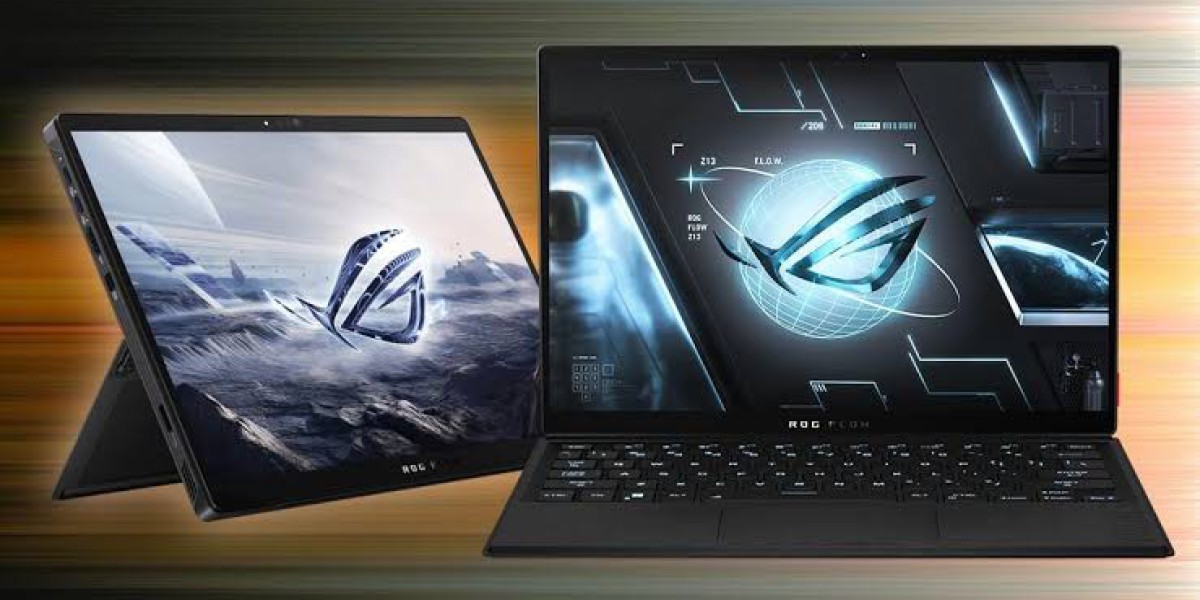
Unlike a traditional gaming laptop, the Flow Z13 is built around a detachable, kickstand-equipped tablet chassis closer in spirit to a Microsoft Surface than to a bulky 17-inch gaming rig. Yet under that slim shell sits genuinely serious hardware, headlined by AMD's Ryzen AI Max+ 395 processor (also known as "Strix Halo") and a fast integrated GPU that punches well above what most people expect from a tablet.
What Is the ASUS ROG Flow Z13, Exactly?
The ROG Flow Z13 sits at the intersection of three device categories: gaming laptop, productivity tablet, and creator workstation. It ships as a 13.4-inch tablet with a detachable, magnetically attached keyboard and a built-in kickstand, similar in concept to the Surface Pro line but engineered for gaming-grade thermal output.
The latest generation is built around the AMD Ryzen AI Max+ 395 APU, a chip that combines a powerful CPU with an unusually capable integrated Radeon 8060S GPU sharing unified memory. Because the memory is unified, ASUS can configure the Flow Z13 with up to 128GB of RAM, letting users dynamically allocate a large chunk to graphics, a feature more commonly associated with desktop workstations or Apple Silicon Macs than with a 13-inch tablet.
Key Specifications at a Glance
Display: 13.4-inch ROG Nebula touchscreen, 2.5K resolution, 180Hz refresh rate, 3ms response time, 500 nits peak brightness, 100% DCI-P3 coverage
Processor: AMD Ryzen AI Max+ 395 ("Strix Halo")
Graphics: Integrated AMD Radeon 8060S with shared unified memory
Memory: Configurable up to 128GB unified RAM
Storage: Up to 1TB PCIe SSD
Weight: Roughly 1.2–1.7kg depending on configuration and region
OS: Windows 11 Pro
Gaming Performance: Punching Above Its Weight Class
The headline feature of the Flow Z13 is that it can genuinely run modern AAA games, not just cloud-streamed titles or cut-down mobile ports. <cite index="7-1">Its AMD Ryzen AI Max+ 395 chip is widely regarded as the most powerful APU currently available, and its integrated GPU allows the device to handle most games on medium settings even when unplugged from a power outlet.</cite> Reviewers who tested the device over extended periods found that plugging it into its included high-wattage charger and selecting a higher-power preset with FSR3 upscaling enabled lets it run titles like Cyberpunk 2077 at Ultra settings around 60 frames per second, a genuinely impressive result for a device this size.
In more standardized testing, the Flow Z13 has shown it can push esports titles like Valorant and Counter-Strike 2 well past 120 FPS at 1080p. In contrast, heavier AAA titles such as Shadow of the Tomb Raider tend to land in the 60–80 FPS range at the display's native 2.5K resolution when settings are optimized.
Thermal Performance
Because the Flow Z13 packs gaming-class hardware into a slim tablet body, thermal management is naturally a bigger challenge than it would be in a traditional gaming laptop with more internal volume for airflow. ASUS addresses this with vapor chamber cooling and generous internal spacing, and reviewers have generally found real-world gaming temperatures land in a warm-but-manageable range rather than triggering aggressive throttling. The tradeoff is that the chassis can get noticeably warm to the touch during extended, demanding sessions something to keep in mind if you plan to hold the tablet directly rather than using it in laptop or stand mode.
Display and Everyday Usability
The 13.4-inch ROG Nebula panel is one of the Flow Z13's strongest selling points. With a 2.5K resolution, 180Hz refresh rate, and a 3ms response time, it's built to keep pace with fast-moving competitive games while still looking sharp for everyday productivity work. <cite index="4-1">The panel is paired with 500 nits of sustained brightness, a 90% screen-to-body ratio, and 100% coverage of the DCI-P3 color space</cite>, making it a genuinely vivid screen for both gaming and general content consumption.
Outside of gaming, the device functions as a capable if slightly compromised productivity machine. The detachable keyboard and kickstand design mean you get real flexibility in how you position the device, but reviewers who've used the Flow Z13 as a full-time laptop replacement note that the kickstand isn't as stable as a traditional laptop hinge, particularly when used on a lap rather than a flat surface. The detachable keyboard itself has decent key travel, though the trackpad is smaller than what you'd find on a comparable 13- or 14-inch laptop.
Battery Life and Portability
Portability is where the Flow Z13's tablet-first design pays off. At roughly 1.2kg for some configurations, it's dramatically lighter than the typical 2–3kg gaming laptop, and its compact footprint makes it genuinely easy to toss into a small bag. That said, running demanding games at full power will drain the battery quickly, as is true of virtually any gaming device this is a machine best suited for gaming while plugged in, with battery power reserved for lighter productivity tasks and casual use on the go.