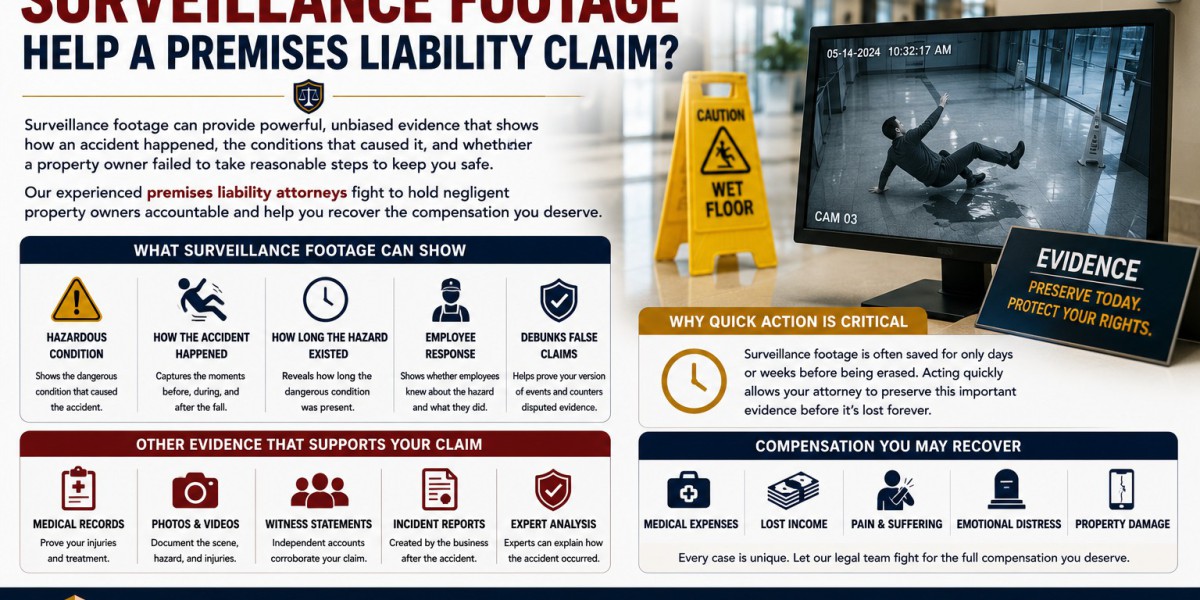

A serious injury on someone else's property can happen in an instant, but proving how the accident occurred is often much more challenging. Property owners and insurance companies may dispute what happened or argue that the injured person was responsible for the incident. In many premises liability cases, surveillance footage can provide objective evidence that helps establish liability and support a claim for compensation. Working with experienced premises liability attorneys early in the process can help preserve critical video evidence before it is deleted or overwritten.
What Is a Premises Liability Claim?
A premises liability claim arises when someone is injured because a property owner or occupier failed to maintain reasonably safe conditions.
These claims may involve accidents such as:
Slip and fall incidents
Trip and fall accidents
Falling merchandise
Inadequate security
Unsafe stairways
Wet floors
Broken sidewalks
Poor lighting
Swimming pool accidents
Property owners have a legal duty to address known hazards or provide adequate warnings when dangerous conditions exist.
Why Is Surveillance Footage So Valuable?
Unlike witness memories, surveillance footage provides a visual record of what actually happened.
Video evidence may help answer important questions, including:
How did the accident occur?
Was a dangerous condition present?
How long did the hazard exist?
Did employees know about the hazard?
Did anyone attempt to correct the problem?
Was the injured person acting reasonably?
These details can significantly strengthen a premises liability claim.
What Can Surveillance Footage Show?
Depending on the location and camera angles, surveillance video may capture valuable information before, during, and after the accident.
The Hazardous Condition
Footage may show hazards such as:
Wet floors
Spilled liquids
Broken flooring
Uneven sidewalks
Loose carpeting
Poor lighting
Debris in walkways
The video may also demonstrate whether warning signs were present.
How the Accident Happened
Surveillance footage can often capture:
The exact moment of the fall
The injured person's movements
The surrounding conditions
The actions of nearby employees or customers
This objective evidence may help resolve disputes about liability.
How Long the Hazard Existed
One of the most important questions in a premises liability case is whether the property owner had enough time to discover and fix the dangerous condition.
Video footage may reveal:
When the hazard first appeared
Whether employees walked past it
How long it remained unaddressed
This information can support claims that the property owner failed to exercise reasonable care.
Employee Response
Video evidence may also show:
Employees noticing the hazard
Delayed cleanup efforts
Failure to place warning signs
Inadequate inspections
These details may help establish negligence.
Why Acting Quickly Is Important
Many businesses automatically overwrite surveillance recordings after a short period.
Depending on the recording system, footage may only be stored for:
Several days
A few weeks
Approximately one month
If the footage is not requested promptly, it may be permanently lost.
An attorney can send a preservation letter requesting that the property owner retain relevant video evidence before it is deleted.
What Other Evidence Supports a Premises Liability Claim?
Although surveillance footage is valuable, it is usually only one part of a strong case.
Additional evidence may include:
Medical Records
Medical documentation establishes:
The nature of your injuries
Treatment received
Future medical needs
Recovery progress
Incident Reports
Many businesses prepare incident reports immediately after an accident.
These reports may document:
Date and time
Location
Witnesses
Employee observations
Photographs
Take photographs of:
The accident scene
Hazardous conditions
Warning signs (or lack of them)
Your injuries
Photos captured immediately after the incident may preserve evidence that later disappears.
Witness Statements
Independent witnesses may confirm:
The dangerous condition
How the accident occurred
Whether employees knew about the hazard
Their testimony can strengthen your claim if liability is disputed.
Can Surveillance Footage Help If Liability Is Denied?
Yes.
Property owners sometimes argue that:
The hazard did not exist.
The injured person was careless.
Warning signs were present.
The accident happened differently.
Video evidence may directly contradict these claims by providing an objective account of the incident.
What Compensation May Be Available?
If negligence caused your injuries, you may be entitled to recover compensation for both economic and non-economic damages.
Medical Expenses
Compensation may include:
Emergency care
Hospital treatment
Surgery
Physical therapy
Prescription medications
Future medical expenses
Lost Income
If your injuries prevent you from working, damages may include:
Lost wages
Reduced earning capacity
Future lost income
Pain and Suffering
You may also recover compensation for:
Physical pain
Emotional distress
Mental anguish
Permanent disability
Loss of enjoyment of life
Property Damage
If personal belongings were damaged during the incident, repair or replacement costs may also be recoverable.
What Should You Do After a Premises Accident?
Taking the right steps immediately after an accident can help preserve valuable evidence.
You should:
Seek medical attention promptly.
Report the accident to the property owner or manager.
Request that an incident report be completed.
Photograph the accident scene.
Obtain witness contact information.
Preserve damaged clothing or footwear.
Avoid discussing fault.
Contact a premises liability attorney as soon as possible.
Quick action increases the likelihood that surveillance footage and other evidence can be preserved.
How Can an Attorney Help?
Premises liability cases often involve disputes over negligence and responsibility.
An experienced attorney can:
Investigate the accident.
Request preservation of surveillance footage.
Gather medical records.
Interview witnesses.
Work with accident reconstruction experts when necessary.
Negotiate with insurance companies.
Prepare your case for trial if a fair settlement cannot be reached.
Early legal representation can be critical, especially when important evidence may disappear.
Conclusion
Surveillance footage can be one of the most persuasive forms of evidence in a premises liability claim. It may reveal how an accident occurred, demonstrate the existence of dangerous property conditions, and show whether the property owner had sufficient time to address the hazard.
While video evidence alone may not determine the outcome of every case, combining it with medical records, witness statements, photographs, and other supporting documentation can significantly strengthen your claim. Acting quickly after an accident can help preserve valuable evidence and protect your ability to pursue the compensation you deserve.