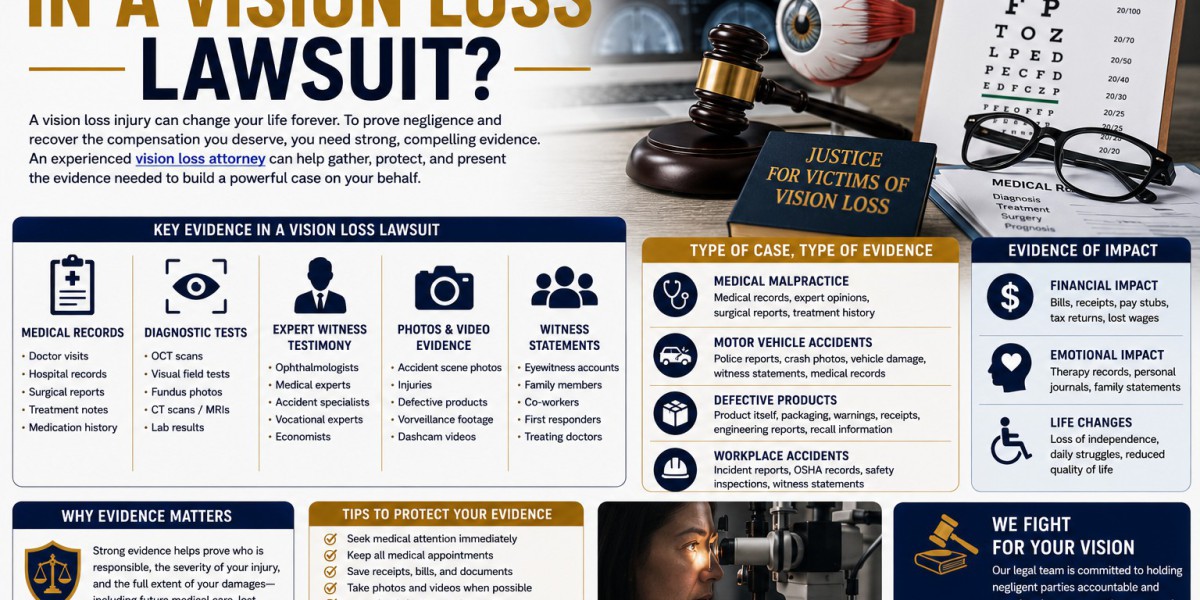

Vision loss can have lifelong consequences, affecting your health, career, independence, and overall quality of life. Whether your injury resulted from medical malpractice, a motor vehicle accident, a defective product, or another act of negligence, the success of your claim often depends on the quality of the evidence you present. Strong documentation can prove who was responsible, demonstrate the extent of your injuries, and establish the compensation you deserve. If you are preparing to file a claim, consulting an experienced vision loss lawyer early can help preserve critical evidence and strengthen your case from the beginning.
Every vision loss lawsuit is unique, but certain types of evidence are essential in nearly every case. Understanding what to collect—and why it matters—can significantly improve your chances of a successful outcome.
Why Evidence Is Critical in a Vision Loss Lawsuit
In any personal injury or medical malpractice claim, the burden of proof rests with the injured party. This means you must demonstrate that another person's negligence or wrongful actions directly caused your vision loss.
Strong evidence helps establish:
Who was responsible for the injury
How the vision loss occurred
The severity of the injury
The financial and emotional impact
The compensation you are entitled to receive
Without sufficient evidence, insurance companies may deny liability or attempt to minimize the value of your claim.
Medical Records Are the Foundation of Your Case
Medical records are among the most important pieces of evidence in any vision loss lawsuit. They provide a detailed history of your diagnosis, treatment, and prognosis.
These records may include:
Emergency room reports
Hospital records
Ophthalmology evaluations
Surgical reports
Prescription records
Follow-up treatment notes
Vision rehabilitation records
Medical documentation helps prove both the cause of the injury and its long-term effects.
Diagnostic Tests That Support Your Claim
Objective medical testing can confirm the severity and permanence of your vision loss.
Common diagnostic tests include:
Optical Coherence Tomography (OCT)
OCT imaging provides detailed images of the retina and optic nerve, helping specialists identify structural damage.
Visual Field Testing
This test measures peripheral vision and documents any functional vision loss.
Fundus Photography
High-resolution images of the retina help physicians identify retinal tears, bleeding, or other permanent damage.
Fluorescein Angiography
This diagnostic procedure evaluates blood flow within the retina and can reveal injuries caused by trauma or disease.
CT Scans and MRI
If your injury involved head trauma or optic nerve damage, advanced imaging can provide additional evidence linking the incident to your vision loss.
Expert Witness Testimony
Many vision loss lawsuits rely on expert testimony to explain complex medical issues.
Depending on the circumstances, experts may include:
Ophthalmologists
Retinal specialists
Neuro-ophthalmologists
Medical malpractice experts
Product safety engineers
Accident reconstruction specialists
Vocational experts
Economists
Expert witnesses explain how the injury occurred, whether negligence was involved, and the long-term impact on your life.
Photographs and Video Evidence
Visual evidence can strengthen your case by documenting both the accident and your injuries.
Helpful examples include:
Photos of the accident scene
Images of damaged protective equipment
Visible eye injuries
Defective products
Surveillance footage
Dashcam recordings
This evidence can support witness testimony and provide a clearer understanding of how the injury occurred.
Witness Statements
People who witnessed the incident or observed your condition after the injury can provide valuable testimony.
Potential witnesses include:
Family members
Friends
Coworkers
Medical staff
First responders
Eyewitnesses
Their statements may help establish the circumstances of the injury and its effect on your daily life.
Employment and Financial Records
Vision loss often affects a person's ability to work and earn income.
Important financial evidence includes:
Pay stubs
Tax returns
Employment records
Disability documentation
Employer statements
Vocational evaluations
These records help calculate lost wages and reduced earning capacity.
Evidence of Pain and Suffering
Not all damages are financial. Courts also consider the emotional and personal impact of permanent vision loss.
Supporting evidence may include:
Mental health treatment records
Psychological evaluations
Personal journals
Testimony from family members
Statements from caregivers
This information helps demonstrate how the injury has affected your emotional well-being and quality of life.
Evidence in Different Types of Vision Loss Cases
The evidence required may vary depending on how the injury occurred.
Medical Malpractice Cases
Evidence often includes:
Medical records
Expert medical opinions
Surgical reports
Diagnostic imaging
Motor Vehicle Accidents
Important evidence may include:
Police reports
Crash photographs
Dashcam footage
Vehicle damage reports
Accident reconstruction analysis
Defective Product Claims
Evidence commonly includes:
The defective product
Product packaging
Warning labels
Purchase receipts
Engineering evaluations
Workplace Accidents
Helpful documentation may include:
Incident reports
OSHA investigation records
Safety inspection reports
Employer documentation
How a Vision Loss Lawyer Helps Collect Evidence
An experienced attorney understands what evidence is necessary to build a strong claim.
A vision loss lawyer can:
Obtain medical records
Preserve physical evidence
Interview witnesses
Consult expert witnesses
Work with accident reconstruction specialists
Review surveillance footage
Calculate future damages
Handle communication with insurance companies
Early legal involvement often prevents important evidence from being lost or destroyed.
Why You Should Preserve Evidence Immediately
Evidence can disappear quickly after an accident or medical error.
To protect your claim:
Keep all medical records.
Save receipts and invoices.
Preserve defective products.
Photograph injuries and accident scenes.
Avoid repairing damaged items.
Keep a journal documenting your recovery.
Acting quickly makes it easier to establish liability and prove damages.
Conclusion
Strong evidence is the foundation of every successful vision loss lawsuit. Medical records, diagnostic testing, expert testimony, witness statements, financial documentation, and photographs all play a vital role in proving negligence and demonstrating the full impact of your injury.
If your vision loss was caused by someone else's negligence, working with an experienced vision loss lawyer can help ensure that critical evidence is preserved and your case is built on a solid legal foundation. The sooner you begin gathering evidence, the stronger your opportunity to pursue fair compensation for your medical expenses, lost income, and future needs.
Frequently Asked Questions
1. What is the most important evidence in a vision loss lawsuit?
Medical records, diagnostic imaging, and expert witness testimony are often the most important forms of evidence.
2. Do I need expert witnesses for a vision loss claim?
Yes. In many cases, ophthalmologists and other specialists help explain how the injury occurred and its long-term effects.
3. Should I keep the defective product that caused my eye injury?
Absolutely. Preserving the product in its original condition may provide critical evidence in a product liability lawsuit.
4. Can photographs help support my claim?
Yes. Photos of your injuries, the accident scene, and damaged equipment can strengthen your case and support witness testimony.
5. How can a vision loss lawyer help gather evidence?
A lawyer can obtain medical records, consult experts, preserve evidence, interview witnesses, and build a comprehensive claim on your behalf.






