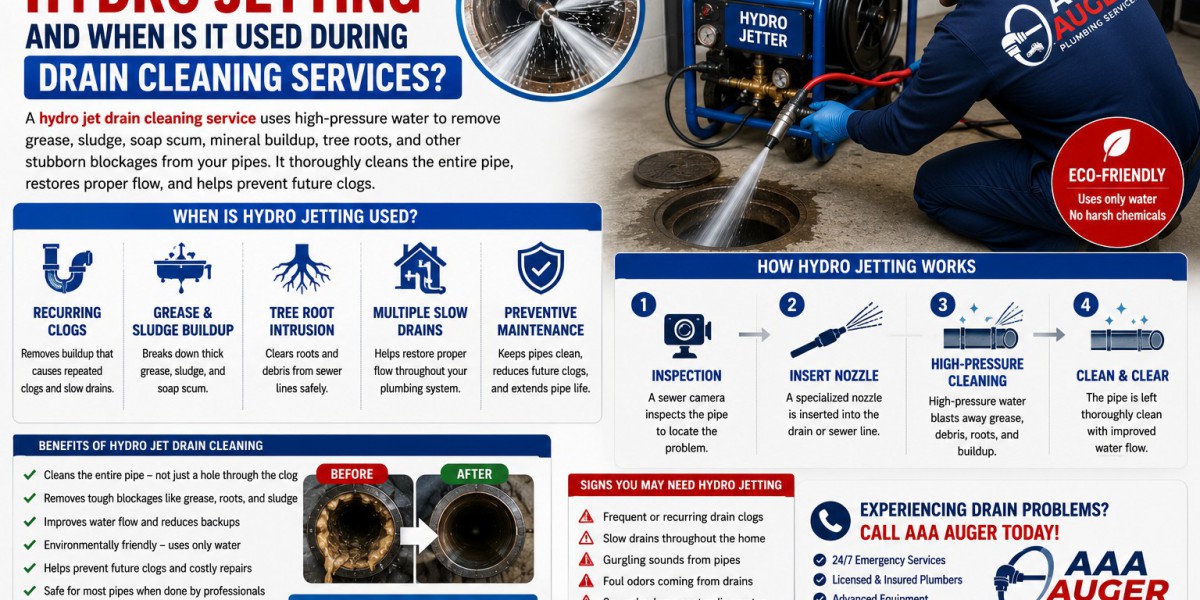

When traditional drain cleaning methods aren't enough to remove stubborn blockages, plumbers often recommend a hydro jet drain cleaning service. This advanced cleaning technique uses high-pressure water to clear grease, sludge, mineral buildup, and even tree roots from the inside of your pipes. Unlike temporary DIY solutions, hydro jetting thoroughly cleans the entire pipe, restoring proper water flow and helping prevent future clogs. Whether you're dealing with recurring drain problems or a blocked sewer line, hydro jetting can be an effective and long-lasting solution.
Understanding how hydro jetting works and when it's appropriate can help you make informed decisions about maintaining your plumbing system.
What Is Hydro Jetting?
Hydro jetting is a professional plumbing method that uses highly pressurized water to clean the inside of drain and sewer pipes.
Instead of simply punching a hole through a blockage, hydro jetting removes:
Grease buildup
Soap scum
Hair
Food debris
Mineral deposits
Sludge
Tree roots
Other stubborn obstructions
The powerful stream of water cleans the full diameter of the pipe, leaving it much cleaner than traditional drain snaking.
How Does Hydro Jetting Work?
Hydro jetting equipment consists of a specialized hose connected to a high-pressure water machine.
The process typically includes:
1. Plumbing Inspection
Before hydro jetting begins, plumbers often perform a sewer camera inspection to evaluate the condition of the pipes.
This inspection helps identify:
Pipe cracks
Corrosion
Tree root intrusion
Heavy blockages
Pipe misalignment
The inspection ensures hydro jetting is safe for your plumbing system.
2. Positioning the Hose
A specialized nozzle is inserted into the affected drain or sewer line.
The nozzle sprays water in multiple directions, allowing it to clean both the blockage and the pipe walls.
3. High-Pressure Cleaning
Water is released at extremely high pressure to remove accumulated debris throughout the pipe.
Unlike chemical cleaners, hydro jetting uses only water, making it an environmentally friendly cleaning method.
When Is Hydro Jetting Recommended?
Hydro jetting is ideal for plumbing systems experiencing persistent or severe blockages.
Common situations include:
Recurring Drain Clogs
If your drains continue clogging after repeated cleaning, buildup likely remains inside the pipes.
Hydro jetting completely removes residue instead of creating only a temporary opening.
Grease Buildup
Restaurants and residential kitchens frequently develop grease buildup inside drain lines.
Over time, grease hardens and traps food particles, reducing water flow.
Hydro jetting effectively removes thick grease deposits.
Tree Root Intrusion
Tree roots naturally seek moisture and often invade underground sewer pipes through small cracks.
Hydro jetting can cut through smaller root systems and clear debris before additional sewer line repairs are performed if necessary.
Slow Drains Throughout the Home
If multiple drains are draining slowly, the problem may involve the main sewer line rather than an individual fixture.
Hydro jetting restores full water flow throughout the plumbing system.
Preventive Plumbing Maintenance
Many homeowners schedule hydro jetting as part of routine plumbing maintenance to reduce the risk of future drain blockages.
Preventive cleaning is especially beneficial for older plumbing systems or properties with mature trees.
Hydro Jetting vs. Traditional Drain Snaking
Both methods are effective, but they serve different purposes.
Hydro Jetting | Drain Snaking |
Cleans the entire pipe | Breaks through the clog |
Removes grease and sludge | Removes localized blockages |
Helps prevent recurring clogs | May leave residue behind |
Effective for sewer lines | Effective for minor clogs |
Uses only pressurized water | Uses a mechanical cable |
Your plumber will recommend the best option based on the condition of your plumbing system.
Benefits of Hydro Jet Drain Cleaning Service
Hydro jetting provides several advantages over conventional cleaning methods.
Thorough Pipe Cleaning
High-pressure water removes buildup from the entire interior surface of the pipe.
Prevents Future Clogs
Because residue is removed completely, new debris has fewer surfaces to attach to.
Environmentally Friendly
Hydro jetting relies solely on water without harsh chemicals that could damage pipes or the environment.
Removes Tough Blockages
Hydro jetting effectively clears:
Grease
Sludge
Soap buildup
Mineral deposits
Hair
Small tree roots
Improves Drain Performance
Clean pipes allow wastewater to flow more efficiently, reducing slow drains and backups.
Is Hydro Jetting Safe for All Pipes?
Hydro jetting is safe for most plumbing systems when performed by an experienced plumber.
However, older or severely damaged pipes should always be inspected first.
A sewer camera inspection helps determine whether:
Pipes are cracked
Corrosion is severe
Pipe joints are loose
Repairs should be completed before hydro jetting
Professional evaluation ensures the safest cleaning method is used.
Signs You May Need Hydro Jetting
Consider scheduling hydro jetting if you notice:
Recurring drain clogs
Multiple slow drains
Frequent sewer backups
Gurgling sounds
Bad odors
Standing water
Grease buildup
Tree root problems
Early treatment helps prevent costly plumbing emergencies.
How to Prevent Future Drain Problems
Although hydro jetting provides excellent cleaning, homeowners can also reduce future clogs by following good plumbing habits.
Helpful tips include:
Never pour grease down kitchen drains.
Use drain strainers to catch hair and debris.
Dispose of food waste properly.
Flush only toilet paper.
Schedule routine plumbing inspections.
Have drains professionally cleaned before severe blockages develop.
Regular maintenance extends the lifespan of your plumbing system.
Why Hire a Professional for Hydro Jetting?
Hydro jetting equipment requires specialized training and should only be operated by licensed plumbing professionals.
Professional plumbers provide:
Accurate diagnosis
Safe equipment operation
Sewer camera inspections
Proper water pressure adjustments
Complete blockage removal
Long-lasting plumbing solutions
Their expertise helps protect your pipes while delivering the best possible cleaning results.
Conclusion
Hydro jetting is one of the most effective methods available for clearing stubborn drain and sewer line blockages. By using high-pressure water to remove grease, sludge, mineral deposits, and tree roots, this advanced cleaning technique restores proper water flow and helps prevent recurring plumbing problems. Whether you're dealing with repeated clogs, slow drains, or sewer line issues, a professional hydro jet drain cleaning service can provide a safe, environmentally friendly, and long-lasting solution that keeps your plumbing system operating efficiently.
Frequently Asked Questions
1. What is hydro jetting used for?
Hydro jetting removes grease, sludge, soap buildup, mineral deposits, and tree roots from drain and sewer pipes using high-pressure water.
2. Is hydro jetting better than drain snaking?
Hydro jetting cleans the entire interior of the pipe, while drain snaking typically removes only the immediate blockage.
3. Can hydro jetting damage pipes?
When performed by a licensed plumber after a proper inspection, hydro jetting is safe for most plumbing systems.
4. How long does a hydro jetting service take?
Most hydro jetting appointments take between one and three hours, depending on the severity of the blockage.
5. How often should hydro jetting be performed?
Many homeowners benefit from hydro jetting every one to two years, while commercial properties may require more frequent service.